
The Messy Middle of an Immigrant Success Story
Founding a therapy practice wasn't the hardest part of my immigrant journey. It was everything that came before it. At a recent Town Hall with Sienna Senior Living, I shared the parts of my story I usually only carry quietly, and what I most wanted the room to understand about who immigrants really are.
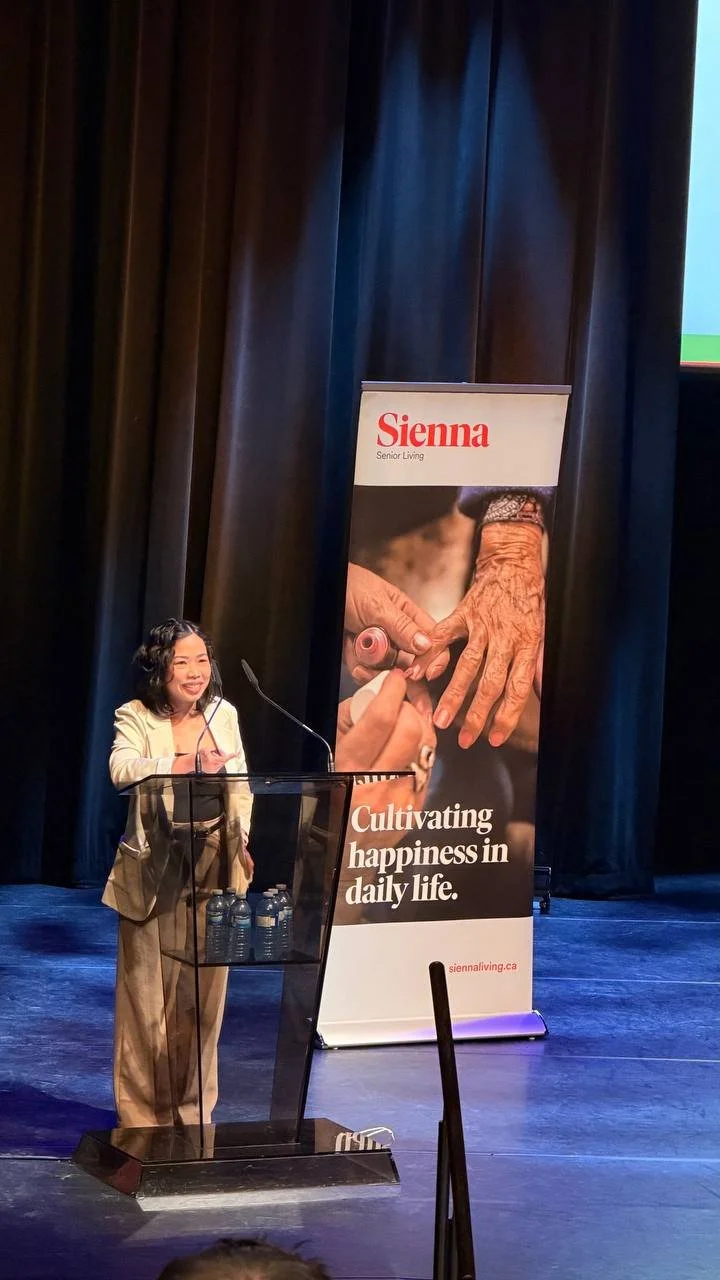
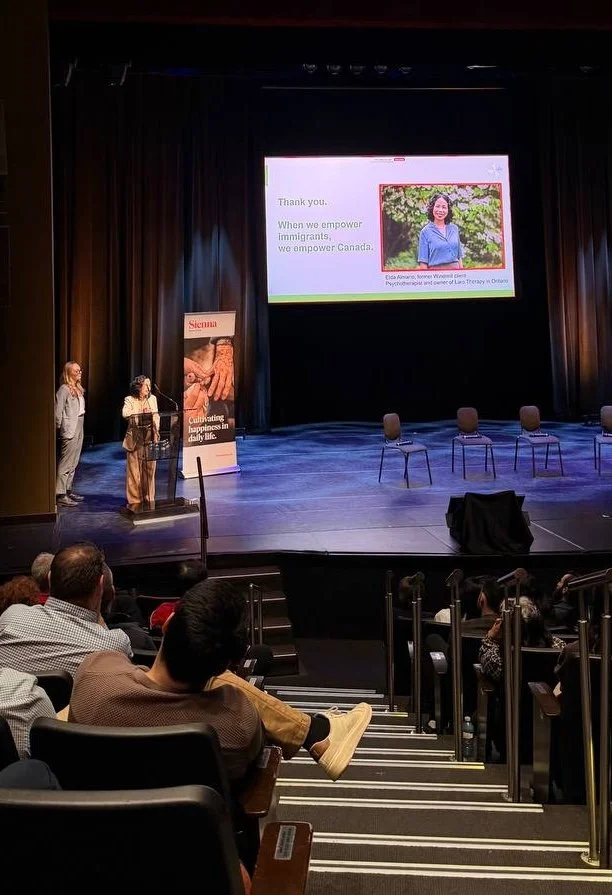
Elda Almario speaking onstage at Sienna Senior Living Town Hall last April 8, 2026 at Flato Markham Theatre
I was invited to share a piece of my immigrant journey at the most recent Town Hall of Sienna Senior Living. Then I stood in front of 200 people, a brief slot in a much larger program, and said out loud the things I usually only carry quietly.
What I didn't fully anticipate was what it would feel like to actually be in that room.
I've talked about my journey in pieces before. But that day, I said it as a whole: leaving a career I'd already built in the Philippines, moving to Toronto in 2018, the rejections, the barriers, the bridging program, my partner quietly holding things together while I figured out how to build a career here. All of it, in front of a room full of Sienna leadership staff gathered for their Town Hall.
What surprised me was how much heavier some parts felt when spoken, and how much lighter others became.
The moments I expected to feel proud of landed more quietly than I thought they would. Founding Larô, running my own practice, being in a leadership position in our regulatory body, and having a home in Pickering. These things are real, and they matter to me deeply. But in that room, what seemed to land loudest, for me and for the audience, wasn't the arrival. It was everything that had happened before it.
There's something that happens when you share a difficult part of your story in a room full of people. You start noticing faces: someone nodding slowly, someone whose expression shifts in a way that tells you they recognize something. That recognition is not small.
The narrative I was handed when I first arrived in Canada was to keep my head down, to take what I was given. Sabi nila, ganyan talaga. It took time, support, and a lot of stubbornness to move through that. But I also know it took other people showing up for me at the right moments: a loan that allowed me to enroll for a bridging program, a placement that took a chance, a community that needed what I had to offer, a partner who said tara na, kaya natin 'to.
Hindi ka nag-iisa pag dating mo dito. And you don't thrive alone either.
But before I get to that, I want to say something I said in that room too.
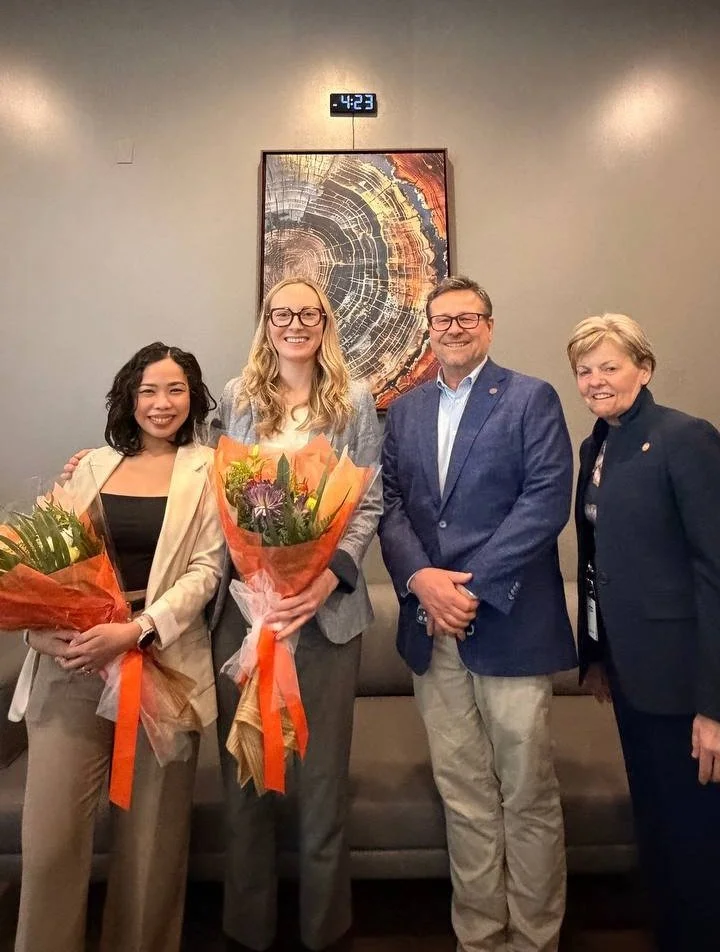
We talk about immigrants, about honouring the sacrifices of those who came before us, our parents, our Lolos and Lolas, the ones who left everything for a chance at something better. At lagi nating sinasabi: we owe it to them. And we do.
But these people are not only figures from the past. They are here, with us, now. They are the person who delivers your mail. The one you interviewed last week. The colleague who stays quiet in meetings but works twice as hard as anyone else in the room. They are me, standing in front of 200 people at a Sienna Town Hall, taking a few minutes out of a program to say: I am still here, still becoming, still in the middle of it.
So when you think about who you honour, I don't want you to only look backward. Look around. The people we speak of with such reverence are present with us today, making the same hard decisions, carrying the same quiet weight.
That's what I wanted to leave in that room: supporting newcomers isn't charity. It isn't a favour extended to people who should feel grateful for it. It's an investment in people who are already contributing and already doing the hard work of rebuilding a life and a practice in a new country.
When newcomers are supported, they don't just adjust. They thrive. And when they thrive, something ripples outward. Into communities, into professions, into the next person who comes after them and needs to know na kaya rin nila.
That's what Larô was built on. That's what I was trying to say that day.
I don't know exactly what each person in that room walked away with. But I know that saying it out loud, in full, did something to me too. Some stories need witnesses. This one finally had them.
If you were in the room that day, salamat. And if you're a newcomer reading this who is somewhere in the middle of your own journey, magsisimula pa lang o matagal nang nasa daan, I see you. The middle is real, and it's worth moving through.
Elda Almario, RP, is a Filipino Psychotherapist, the founder of Larô Therapy, a virtual psychotherapy practice supporting the mental health of the Filipino community. To learn more or Book a Mutual Fit Call, visit the website.