
Simbang Gabi from Afar: Navigating Homesickness During the Filipino Christmas Season
It's 4:30 AM and your alarm goes off, but instead of heading to church for Simbang Gabi, you're staring at the ceiling in a country that still doesn't feel like home. Whether this is your first Christmas abroad or your tenth, the homesickness during Simbang Gabi season never quite goes away. Learn evidence-based strategies to honour this sacred tradition while caring for your mental health, even from afar.
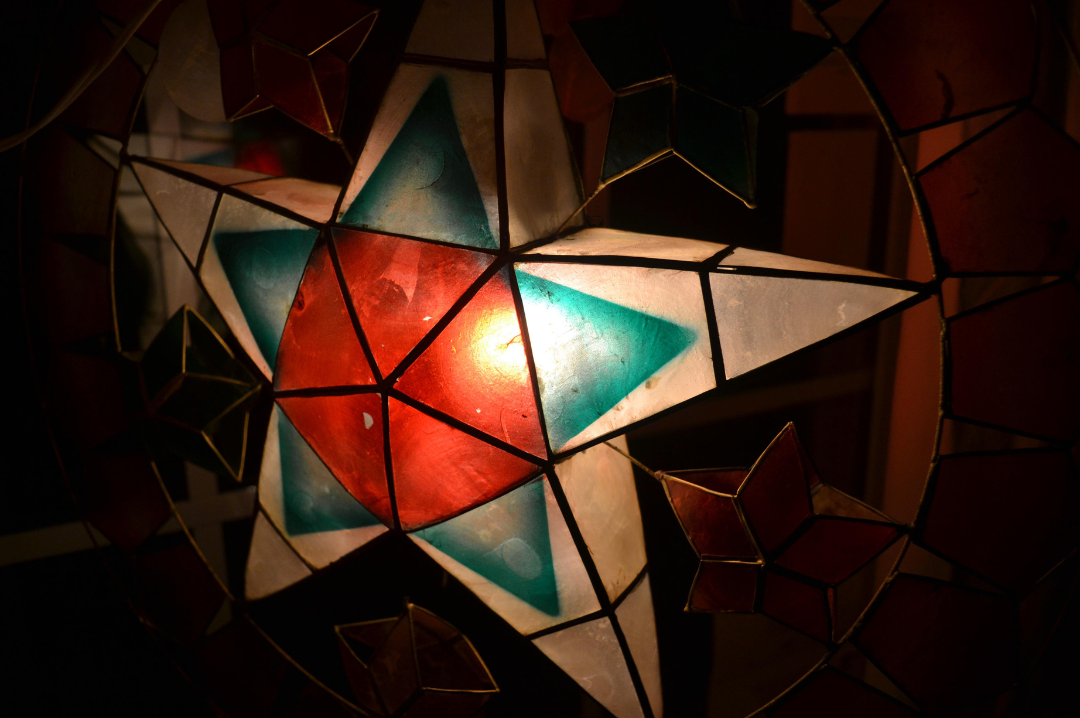
Close-up photo of a white, green, and red parol in the dark. Photo by AlenRio from pixabay
It's 4:30 AM. Your alarm goes off, but instead of heading to church for Simbang Gabi, you're staring at the ceiling of your apartment in a country that still doesn't quite feel like home.
Back in the Philippines, your family is gathering at dawn, the smell of bibingka and puto bumbong filling the cool morning air. Church bells are ringing. Your lola is probably already dressed, ready to fulfill the nine-day tradition that has marked every December of your life.
But you're here. Thousands of miles away. And the ache in your chest feels like it might swallow you whole.
Whether this is your first Christmas abroad or your tenth—whether you're a healthcare worker, student, OFW, or immigrant who's been here for years—the homesickness during Simbang Gabi season never quite goes away. You're navigating something that goes far deeper than simple nostalgia. You're grieving the loss of a tradition that connects you to your faith, your family, and your Filipino identity all at once.
What Makes Simbang Gabi So Deeply Meaningful
For those unfamiliar with this tradition, Simbang Gabi (literally "Night Mass") is a devotional nine-day series of masses attended by Filipino Catholics from December 16-24 in anticipation of Christmas. Originally intended as a practical compromise for farmers who started working in the fields before sunrise during Spanish colonisation beginning in 1669, this cherished Christmas custom eventually became a distinct feature of Philippine culture and a symbol of sharing.
The series of masses are held daily from December 16 to 24 and occur at different times ranging from as early as 2:30 AM to 5:00 AM, culminating with the Misa de Gallo (Spanish for "Rooster's Mass") on Christmas Eve.
In the Philippines, the pre-dawn Mass is announced by the ringing of church bells, and in some rural areas, an hour before the start of Simbang Gabi, a brass band plays Christmas music all over the town.
But Simbang Gabi is more than just attending church. It's:
A family ritual passed down through generations
A community gathering where you see neighbours, classmates, extended family
A sensory experience of cool morning air, church bells, incense, traditional food
A spiritual practice honouring the Blessed Virgin Mary
A cultural marker of being Filipino during the most important season
A folk belief that if you complete all nine masses, your deepest wish will be granted
It is a significant moment not only because it strengthens relationships among family members but also because it is the time where faith is intensified. For Filipinos living overseas, observing Simbang Gabi helps maintain a connection with their roots in the Philippines.
When you're abroad and unable to participate in this tradition or participating in a diaspora community that feels different from home, you're not just missing a religious service. You're missing a piece of your identity.
Understanding Homesickness as a Legitimate Mental Health Concern
What you're feeling is not weakness. It's not being "too sensitive" or "not trying hard enough to adjust."
Homesickness ranked first among 18 possible post-migration stressors in a sample of refugees in the Netherlands, and nearly half of asylum seekers in a Swiss study reported being homesick frequently. Research shows that homesickness has consequences including psycho-social disorder and deterioration of physical health, which damages individual wellbeing, work outcomes, and organisational commitment.
The Filipino term "namamahay" (missing home) actually describes a range of symptoms from insomnia to physical discomfort when away from home, recognizing that homesickness affects both mind and body.
Common symptoms of homesickness include:
Persistent sadness or tearfulness, especially during cultural holidays
Difficulty concentrating at work or school
Sleep disturbances (insomnia or oversleeping)
Changes in appetite
Physical symptoms like headaches or stomach issues
Irritability or mood swings
Social withdrawal
Intrusive thoughts about home
Research on immigrants shows that those who experience acculturative stress—the challenges of adapting to a new culture—are more likely to experience anxiety or depression. Immigrants face challenging post-migration circumstances, such as separation from family, cultural and linguistic barriers, and adjustment to a new and sometimes unwelcoming environment, which may exacerbate existing mental health problems or initiate new concerns.
During your Simbang Gabi season abroad, these feelings can intensify because the holiday amplifies what you're missing: not just people, but traditions, sensory experiences, and a sense of belonging.
Many Filipinos find that even after years abroad, the homesickness during Christmas doesn't fully disappear. It may shift or soften, but the ache remains, especially during culturally significant moments like Simbang Gabi.
The Cultural Double Grief
As a Filipino abroad during Christmas, you may be experiencing what we call "cultural double grief"—you're grieving both:
The loss of physical presence with loved ones
The loss of cultural immersion in traditions that define your identity
This is particularly painful because Filipino Christmas isn't just December 25th. It's an entire season that begins in September (the "ber months") and builds to Noche Buena on Christmas Eve, the most important family celebration of the year.
You might try to replicate traditions, but:
The local Filipino parish's Simbang Gabi is held in the evening instead of dawn
The congregation doesn't sing the songs you grew up with
There's no bibingka or puto bumbong afterward
You're surrounded by strangers instead of your community
The parol in your apartment feel like a sad reminder rather than a celebration
And if there's no Filipino community nearby, you might be facing the holidays entirely alone, without even these adapted traditions.
Strategies for Navigating Homesickness During Simbang Gabi Season
While we cannot eliminate your grief or bring your family to you, we can offer evidence-based strategies to help you navigate this season with more compassion for yourself and more connection to what matters most.
1. Acknowledge and Validate Your Grief
First and foremost: what you're feeling is real, valid, and understandable.
You're not being dramatic. You're not "making a big deal out of nothing." You're experiencing a legitimate loss. The temporary loss of physical connection to people, places, and traditions that have shaped who you are.
Research shows that homesickness is linked to both genuine separation distress (missing family and friends, yearning for home) and difficulties adjusting to new situations. Both aspects are valid and both need acknowledgment.
Practice: When grief hits during Simbang Gabi season, place your hand on your heart and say aloud: "This is really hard. I'm allowed to miss home. I'm allowed to feel sad while also being grateful for where I am."
2. Create Adapted Rituals That Honour the Tradition
You cannot replicate Simbang Gabi exactly as it was at home. But you can create adapted rituals that honour the spirit of the tradition while acknowledging your current reality.
If there's a local Filipino parish:
Attend even if it's evening mass instead of dawn
Introduce yourself to one new person
Bring bibingka or puto bumbong ingredients to share (even if homemade)
Stay for the community meal afterward
Filipino communities have made changes in how Simbang Gabi is celebrated, with some parishes observing the tradition around 7 PM or 8 PM instead of early morning to accommodate community needs
If there's no Filipino community:
Stream a Simbang Gabi mass from the Philippines (many are broadcast online)
Set your alarm for 4:30 AM and pray or reflect for even 10 minutes
Play Filipino Christmas songs ("Ang Pasko ay Sumapit," "Pasko na Naman")
Make or buy traditional foods as an offering to yourself
Display your parol proudly
Video call family during their Simbang Gabi
The goal isn't perfection—it's connection. Even small acts of cultural practice can ease the ache.
3. Reframe the Meaning of "Completing" Simbang Gabi
The folk belief that completing all nine masses grants your wish is beautiful, but it can also create pressure and guilt when circumstances prevent you from attending.
Consider reframing: The spirit of Simbang Gabi is about devotion, community, and preparation for Christ's birth. If you cannot attend all nine masses in person, you can still:
Practice daily prayer or reflection during the nine days
Offer acts of service to others (very much in the spirit of malasakit)
Make small sacrifices (waking early, fasting from something)
Connect with family virtually during their masses
Hold the intention of the novena in your heart
God (and your family) understands your circumstances. Your devotion is measured not by physical attendance but by the love and faith in your heart.
4. Build Virtual Connection While Managing Expectations
Technology allows us to stay connected in ways previous generations of OFWs never could. But virtual connection also has limitations, it can sometimes intensify loneliness rather than ease it.
Healthy virtual connection practices:
Schedule specific video calls during family's Simbang Gabi or Noche Buena
Share photos of your own traditions, however small
Send voice messages rather than just text (hearing your loved ones' voices matters)
Join virtual Filipino Christmas events if your schedule allows
But also give yourself permission to:
Limit social media if seeing everyone else's celebrations increases your pain
Step away from group chats when the family banter about food or gatherings becomes too much
Say no to excessive video calls that leave you feeling more lonely afterward
Research shows that being part of a community with a shared background is associated with better mental health among immigrants. While virtual community doesn't replace physical presence, it still provides meaningful connection.
5. Practice Self-Compassion, Not Self-Criticism
Filipino culture often emphasises being "matibay" (strong) and not complaining. But strength doesn't mean suppressing legitimate grief.
Studies show that self-compassion appears to be a pragmatic self-care strategy for mental health practitioners to mitigate negative effects, with self-compassion scores being a significant negative predictor of burnout levels. The same applies to you.
When harsh thoughts arise:
"I should be grateful I'm here. Other people have it worse."
Reframe: "I can be grateful for opportunities AND grieve what I'm missing. Both feelings can exist together."
"I'm being weak and dramatic."
Reframe: "Missing home during the most important holiday season is a normal human response. Homesickness is a recognised mental health concern, not a character flaw."
"My family sacrificed for me to be here; I have no right to be sad."
Reframe: "My family's sacrifices are honored when I acknowledge my full humanity—including my sadness—rather than pretending everything is fine."
6. Find Meaning in the Present While Honoring the Past
This is perhaps the most difficult balance: how do you fully experience where you are NOW while still honouring the traditions and people you're separated from?
Acceptance and Commitment Therapy (ACT) offers a helpful framework here. ACT has plausible evidence for efficacy in treating stress by working through increasing psychological flexibility—the ability to be present with difficult emotions while still taking action toward your values.
Ask yourself:
What are my deepest values around faith, family, and cultural identity?
How can I honour those values in my current circumstances, even if imperfectly?
What small actions can I take today that align with who I want to be?
Perhaps your value is malasakit (compassionate care). You can express that by:
Showing extra kindness to patients or colleagues during the holidays
Checking in on other Filipinos in your community
Volunteering your time
Simply being gentle with yourself
7. Plan for Next Year (While Accepting This Year)
If this is truly unbearable and you have the means, start planning now for next year:
Save money to potentially fly home for Simbang Gabi next December
Connect with other Filipinos in your area to build community
Research parishes that celebrate Simbang Gabi traditionally
Look into virtual support groups for Filipinos abroad
But also accept that this year is what it is. You cannot change it. You can only choose how you respond to it.
When Homesickness Requires Professional Support
While homesickness is a normal response to migration, there are times when it crosses into something requiring professional intervention.
Seek help if you're experiencing:
Persistent inability to function at work or school
Suicidal thoughts or self-harm impulses
Complete social isolation and withdrawal
Inability to find any joy or meaning in daily life
Physical symptoms that don't improve (chronic insomnia, significant weight loss)
Substance use to cope with the pain
Research shows that immigrants use mental health services at lower rates than non-immigrants, despite equal or greater need. Structural barriers include lack of insurance, high cost, and language barriers. If you're hesitating to seek help because of hiya (shame) or believing you "should" handle this alone—please know that professional support is not weakness. It's wisdom.
A Message of Hope
The ache you're feeling during this Simbang Gabi season is real. The grief of being separated from your family during the most meaningful holiday is legitimate. The challenge of maintaining your Filipino identity while living abroad is exhausting—whether you've been here one year or twenty.
And yet.
You are here for a reason. Whether you came for education, work, a better life, or love—you made a brave choice that required enormous courage.
Your presence abroad doesn't erase your Filipino identity. Your inability to attend Simbang Gabi at your home parish doesn't make you less Catholic or less devoted. Your sadness during Christmas doesn't mean you're ungrateful or haven't adapted well enough.
You are carrying your culture with you, even when it feels like you've lost it. Every time you pray in Tagalog, cook Filipino food, share stories about home, or simply miss the sound of church bells at 4:30 AM. You are keeping your heritage alive.
For those experiencing this for the first time: it does get easier to navigate, even if the longing never fully disappears. Research shows that age and length of residence in a host country are associated with lower levels of psychological distress and homesickness, suggesting that adaptation improves over time.
For those who've been abroad for years: your grief is still valid. Sometimes the homesickness hits just as hard in year ten as it did in year one. You're allowed to still miss home, even if you've built a beautiful life where you are.
You will build new traditions. You will find community. You have already discovered ways to be both Filipino AND at home in your new country, even when it doesn't feel like it during December.
But for now, this December, give yourself permission to grieve. Light a candle. Play "Ang Pasko ay Sumapit." Cry if you need to. Call home. And know that even from thousands of miles away, you are still connected to the faith, family, and traditions that made you who you are.
Maligayang Pasko. You are not alone.
If you're a Filipino navigating homesickness and cultural adjustment, we're here to help. Therapy can provide culturally-sensitive support as you build a life that honours both your heritage and your present reality. Book a Mutual Fit Call to explore how we can work together.
References
Alegría, M., et al. (2017). Immigration and mental health. Current Epidemiology Reports, 4(2), 145-155. https://doi.org/10.1007/s40471-017-0111-2
Asian Journal News. (2024). Simbang Gabi: A revered Filipino Christmas tradition. Retrieved from https://asianjournal.com/entertainment/events/simbang-gabi-a-revered-filipino-christmas-tradition/
Catholic Archdiocese of Edmonton. (2024). Simbang Gabi is a Filipino Christmas tradition honouring the Blessed Mother. Retrieved from https://caedm.ca/simbang-gabi-is-a-filipino-christmas-tradition-honouring-the-blessed-mother/
Christianity Today. (2024). The nine days of Filipino Christmas. Retrieved from https://www.christianitytoday.com/2024/12/simbang-gabi-philippines-christmas-catholic-protestant/
Hack-Polay, D. (2020). Global South expatriates, homesickness and adjustment approaches. Public Health Reviews, 41, 14. https://doi.org/10.1186/s40985-020-00122-9
Iqbal, N., & Dar, K. A. (2022). Psychological distress and homesickness among Sudanese migrants in the United Arab Emirates. Frontiers in Psychology, 13, 814366. https://doi.org/10.3389/fpsyg.2022.814366
Lyon, T. R., & Galbraith, A. (2023). Mindful self-compassion as an antidote to burnout for mental health practitioners. Healthcare, 11(20), 2715. https://doi.org/10.3390/healthcare11202715
OSV News. (2024). Filipino Simbang Gabi masses more and more rooted in the US. Retrieved from https://www.osvnews.com/filipino-simbang-gabi-masses-more-and-more-rooted-in-the-us/
Philstar.com. (2023). Christmas in the Philippines: Why Simbang Gabi is an important Filipino tradition. Retrieved from https://www.philstar.com/lifestyle/2023/12/15/2318642/christmas-philippines-why-simbang-gabi-important-filipino-tradition
Rosner, R., et al. (2022). Homesickness in asylum seekers: The role of mental health and migration-related factors. Frontiers in Psychiatry, 13, 1034370. https://doi.org/10.3389/fpsyt.2022.1034370
Salas-Wright, C. P., et al. (2022). Mental health service use among immigrants in the United States: A systematic review. Psychiatric Services, 67(3), 265-274.
Twohig, M. P., et al. (2024). An overview of research on acceptance and commitment therapy. Psychiatric Clinics of North America, 47(2), 419-431. https://doi.org/10.1016/j.psc.2024.02.007
World Health Organization. (2024). Refugee and migrant mental health. Retrieved from https://www.who.int/news-room/fact-sheets/detail/refugee-and-migrant-mental-health
This blog post is for informational purposes only and does not constitute medical or mental health advice. If you are experiencing a mental health emergency, please call your local emergency services or the 988 Suicide & Crisis Lifeline.